.png&w=128&q=75)


EV Charging Explained (Without the Jargon)
Posted in Tips Tricks
EV Charging Explained (Without the Jargon)
If you’ve ever looked into electric vehicles and thought, “This all sounds a bit too complicated…” you’re not alone. Charging is often the biggest question people have when considering an EV. But the reality? It’s actually much simpler than it sounds. So let’s break it down.
First things first - charging your car is like charging your phone
At its core, charging an electric vehicle is exactly what you think it is, plugging it in and topping up the battery. The main difference? Instead of charging overnight for a few hours, you’re charging a much bigger battery for a longer period. That’s it.
Where Can You Charge?
There are three main places most people charge their EV:
1. At Home (The Most Common)
This is where most EV owners do the majority of their charging. You just plug in when you get home and wake up to a charged car. When charging at home you can use a standard power outlet (it's slower but works fine) or an at home wall charger (faster and potentially more convenient) and for most people this covers everyday driving easily.
2. At Work
As EV's become more common we're finding that more workplaces are starting to offer charging for employees. If your workplace offers this, it’s a great way to top up during the day, especially if you have a longer commute.
3. On the Go (Public Chargers)
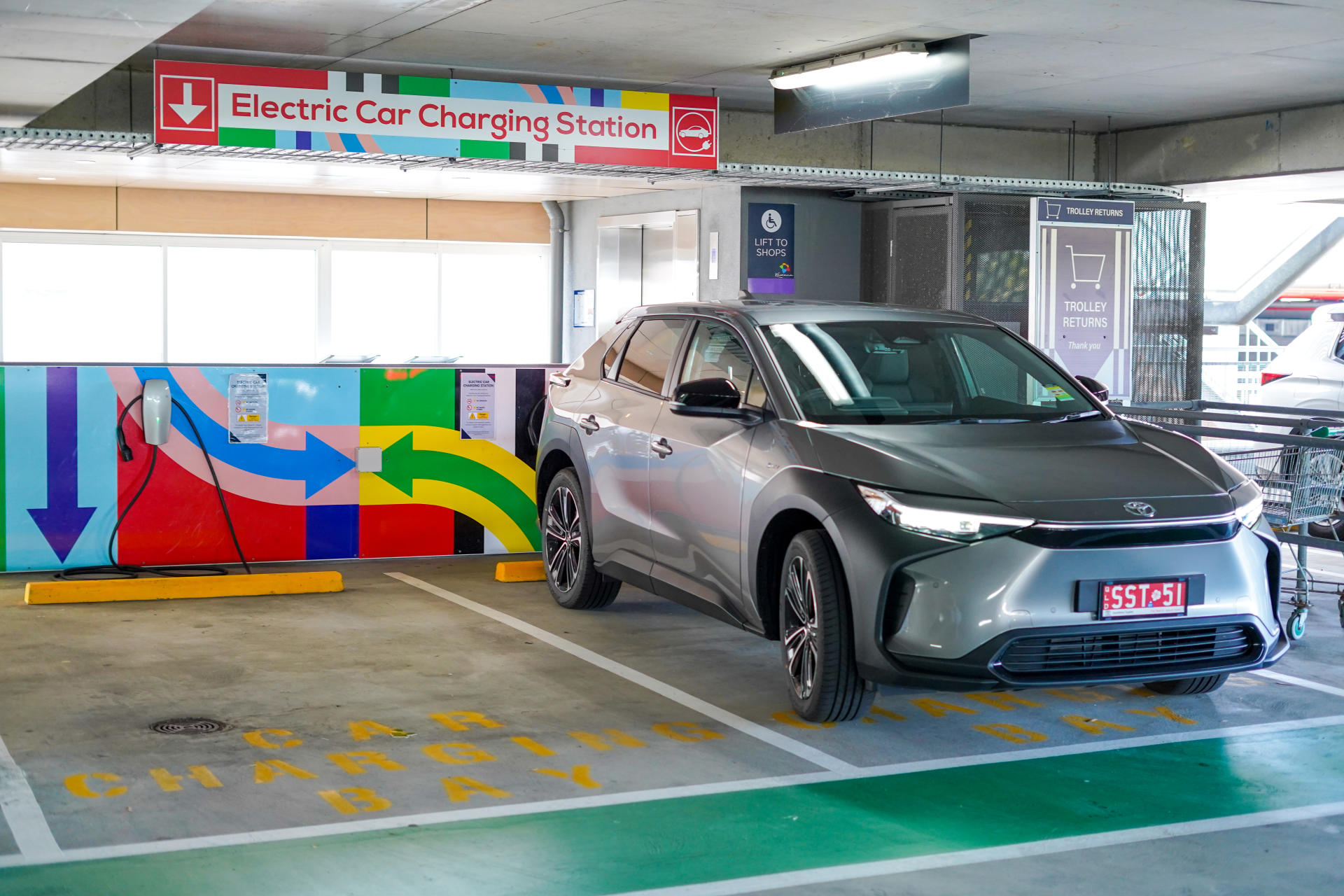
Public charging stations are becoming more common across Australia as charging infrastructure improves locally. Commonly, you can find fast chargers (public charging stations) at shopping centres, service stations and highway stops. There are also websites available that can help you find where EV charging stations are:
How Long Does Charging Take?
This is where people often expect a complicated answer, but it really comes down to how you’re charging your car and what percentage of battery you have left. But as a general guide
- At home (with a standard power plug): this is slow and steady, ideally requiring overnight charging
- Home wall charger: Faster than a standard power plug, but again to get a full charge you would usually need to leave overnight.
- Public fast charger: the quickest charging option, but speaking generally you can get a significant top-up charge in around 20–40 minutes
Most EV drivers quickly fall into a routine where charging just happens in the background, not something you actively think about, similar to charging your phone.
How Far Can You Go?
Modern EVs, like the Toyota bZ4X, offer a driving range of up to Up to 591km[G66]WLTP range on a full charge (depending on conditions). And for most people that is more than enough for daily commuting, school runs and weekend errands, and when it comes to longer trips you have the option to plan your trip and use fast charges as you need them.
Do You Need to Charge Every Day?
Not at all.
Most people don’t drive anywhere near the full range in a single day. That means you can simply plug in when it suits you, rather than waiting until the battery is low.
It’s less like going to a petrol station… and more like keeping your phone topped up.
What About Plug-In Hybrids?
If you’re not quite ready for a full EV, plug-in hybrids (PHEVs) offer a great middle ground.
They can be charged just like an EV for short, everyday trips — but also have a petrol engine for longer journeys.
It’s a flexible way to experience electric driving without changing your routine too much.
The Bottom Line
Charging an EV might seem unfamiliar at first — but it quickly becomes second nature.
Most of the time, it’s as simple as plugging in at home and letting the car charge while you sleep.
No queues. No last-minute fuel stops. No stress.
Just a new, more convenient way to drive.
Thinking About Making the Switch?
The best way to understand EV charging is to experience it for yourself.
Come in and take the Toyota bZ4X for a drive — and see how easily it fits into your everyday life.
G66: Results were achieved under test conditions and do not reflect the driving range in real world driving. Actual driving range can be significantly less than test driving range, depending on various factors. To learn more about how different factors can impact range, please see https://www.toyota.com.au/explore/electrified/faqs.


