.png&w=128&q=75)


What Makes Toyota's Approach to EVs Different?
Posted in Toyota Tips Insights
What Makes Toyota’s Approach to EV Different?
If you've been looking into electric vehicles lately, you've probably noticed that almost every car brand seems to be heading in the same direction: fully electric, as quickly as possible. Toyota, however, is taking a slightly different path.
And before you assume that means Toyota is falling behind, it's actually quite the opposite.
Toyota's view is simple: not every driver has the same lifestyle, budget or driving habits. Someone commuting around the Sunshine Coast every day has very different needs to someone regularly driving to Brisbane, Gympie or regional Queensland.
So instead of betting everything on one type of vehicle, Toyota is giving drivers more choice when it comes to driving electric
Quick Answer: What Makes Toyota's EV Strategy Different?
Toyota doesn't believe there's a single solution that's right for every driver.
That's why we offer a range of electrified vehicles, including hybrids, plug-in hybrids, battery electric vehicles and vehicles with hydrogen technology. The goal is to help people reduce emissions in a way that actually fits their lifestyle, rather than expecting their lifestyle to adapt to the technology.
Why Isn't Toyota Going Fully Electric Like Some Other Brands?
It's a question we're starting to hear more and more. The reality is that while EVs make perfect sense for some people, they're not automatically the best solution for everyone. Think about it, if you have a garage, charge at home and mostly drive locally, an EV could be ideal. But if you're regularly towing, travelling long distances or living somewhere with limited charging infrastructure, you might feel more comfortable with a hybrid or plug-in hybrid. Toyota's philosophy is that drivers deserve options; rather than asking customers to fit into one box, they're offering several pathways towards lower-emission motoring.
| Technology | Uses Fuel | Plug In Required | Best For |
|---|---|---|---|
| Hybrid | Yes | No | Daily commuting and fuel savings |
| Plug-In Hybrid (PHEV) | Yes | Yes | Drivers wanting EV capability with petrol backup |
| Battery Electric Vehicle (BEV) | No | Yes | Drivers with access to regular charging |
| Hydrogen Fuel Cell Vehicle | No | Hydrogen Refuelling | Future transport applications |
This gives Australians greater flexibility while supporting the transition to lower-emission transport.
What Does "Multi Pathway" Actually Mean?
You'll often hear Toyota talk about its "multi-pathway approach". That's really just a fancy way of saying there's more than one way to reduce emissions. Here's a simple breakdown:
| Vehicle Type | How It Works | Best Suited To |
|---|---|---|
| Hybrid | Petrol and electric working together | Drivers wanting better fuel economy without changing habits |
| Plug In Hybrid | Can run on electricity and petrol | Drivers wanting flexibility for both short and long trips |
| Battery Electric Vehicle | Powered entirely by electricity | Drivers with easy access to charging |
| Hydrogen Fuel Cell | Powered by hydrogen | Future mobility solutions currently being developed |
Toyota understands that there's no "best" option for everyone. The best option is the one that suits how you actually use your vehicle.
Isn't Toyota New to Electric Vehicles?
Not at all. In fact, Toyota has been working with electrified vehicles for decades. Many people forget that Toyota helped bring hybrid technology into the mainstream long before electric vehicles became a major conversation. That experience matters because it means Toyota has spent years learning about things customers actually care about:
- Battery longevity
- Reliability
- Real world efficiency
- Everyday usability
- Long term ownership costs
For most drivers, that's far more important than simply having the latest technology.
Is the Toyota bZ4X Designed for Real Life?
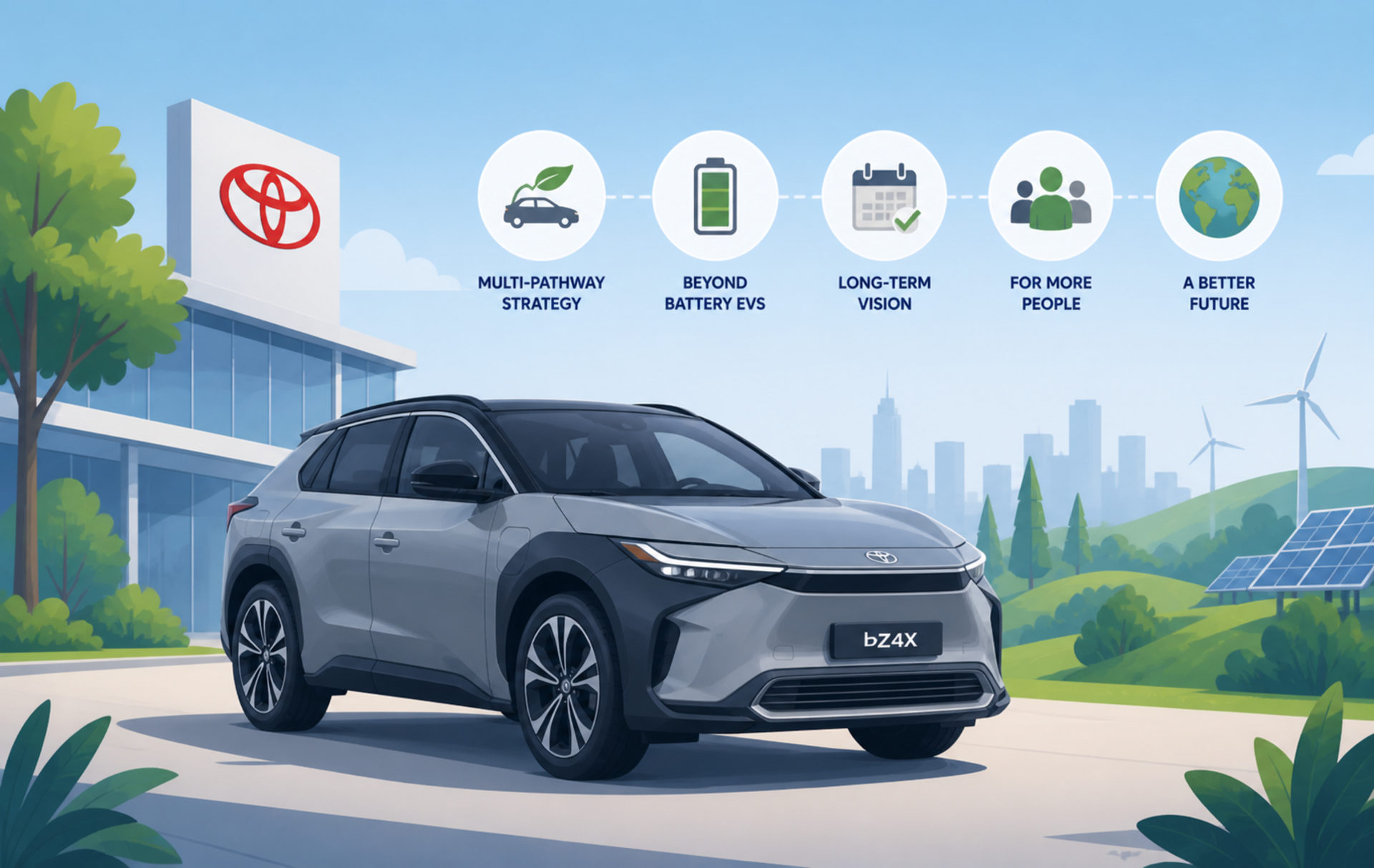
Some EVs can feel like technology showcases. The Toyota bZ4X feels more like a Toyota, and that's intentional. Toyota designed the bZ4X to be approachable for people making their first move into EV ownership. It's quiet, comfortable, practical and packed with the safety features that Toyota drivers already know and trust. In other words, it feels less like learning a new way to drive and more like driving a Toyota that's powered differently.
What About Charging?
Let's be honest, charging is usually the elephant in the room whenever someone starts looking at electric vehicles. At Sunshine Toyota, one of the most common things we hear is: "What if I run out of charge?" or "Charging sounds complicated, can you tell me how it works?" But for many EV owners, charging becomes one of the easiest parts of ownership. In fact, most charging happens at home, often overnight while you're sleeping. It's a bit like charging your phone, you plug it in at night and it's ready to go the next day. For longer trips, Australia's charging network continues to grow, making electric vehicle ownership easier than ever before.
Is an EV Actually Practical on the Sunshine Coast?
For many locals, absolutely. A lot of Sunshine Coast driving involves predictable daily journeys which is great for electric vehicles:
- School drop offs
- Commuting between Caloundra and Maroochydore
- Running errands
- Weekend trips to Noosa
- Social visits around the Coast
For these kinds of driving patterns, an EV can work extremely well. At the same time, some drivers regularly travel further afield or prefer the flexibility of a hybrid or plug-in hybrid. That's why Toyota's approach resonates with so many local drivers. Instead of being told what they should drive, they can choose what works best for them.
So, Should You Choose a Hybrid, plug-in hybrid, or EV?
There's no universal answer, and that's exactly the point. A hybrid might be perfect if you want better fuel economy without changing your routine. A plug-in hybrid could give you the best of both worlds. An electric vehicle may suit you if you have easy access to charging and want to eliminate petrol completely. The right choice depends on your lifestyle, not on what happens to be trending.
The Bottom Line
Toyota's approach to EVs is different because it starts with a simple question:"What's going to work best for the customer?" Rather than focusing on one technology, Toyota is investing in multiple solutions and giving drivers the freedom to choose the option that suits their needs. For Sunshine Coast drivers, that's often a refreshing approach. Whether you're ready to go fully electric, considering a plug-in hybrid or simply looking to reduce your fuel bills with a hybrid, Toyota's goal is to make the transition feel practical, achievable and tailored to the way you actually drive.
At Sunshine Toyota, we've helped local Sunshine Coast drivers compare hybrid, plug-in hybrid and electric vehicles. One of the most common concerns we hear is charging infrastructure and battery longevity. For many customers, a hybrid vehicle remains the easiest first step into electrified driving. If you need help discovering the right electrified option for you.


