.png&w=128&q=75)


Toyota Towing Guide: Everything You Need to Know Before You Tow
Posted in Tips Tricks
Toyota Towing Guide: Everything You Need to Know Before You Tow
Whether you're towing a caravan around Australia, launching a boat on the Sunshine Coast, or hauling a trailer for work, understanding safe towing practices is essential.
Towing isn't just about staying within your vehicle's towing capacity. You also need to understand GVM, GCM, tow ball download, trailer loading, coupling selection and vehicle stability to help keep your Toyota performing safely and efficiently.
This guide explains the key towing principles every Toyota owner should understand before hitching up a trailer or caravan.
Quick Answer: What Should You Check Before Towing?
Before towing a trailer or caravan, make sure:
- Your vehicle is within its GVM (Gross Vehicle Mass)
- Your trailer is within its ATM (Aggregate Trailer Mass)
- Your combined setup remains within GCM (Gross Combination Mass)
- Tow ball download is approximately 9% to 11% of trailer weight *does not exceed the maximum load for the vehicle
- Heavy items are positioned over the trailer axle
- Trailer brakes, lights and safety chains are functioning correctly
- Tyre pressures are set correctly on both vehicle and trailer
Following these steps can help improve towing stability, handling and safety.
What Do GVM, GCM, GTM and ATM Mean?
Understanding towing terminology is one of the most important steps when setting up a safe towing combination.
| Towing Term | Meaning |
|---|---|
| GVM (Gross Vehicle Mass) | Maximum loaded weight of the vehicle including passengers, accessories, luggage and tow ball download. |
| GTM (Gross Trailer Mass) | Weight transferred to the road by the trailer tyres. |
| GCM (Gross Combination Mass) | Maximum allowable combined weight of the vehicle and trailer. |
| ATM (Aggregate Trailer Mass) | Maximum loaded weight of the trailer specified by the manufacturer, including tow ball download. |
| Tow Ball Download | The downward force applied by the trailer onto the vehicle's tow ball. |
Expert Tip from Sunshine Toyota: One of the most common towing mistakes we see is owners focusing solely on towing capacity while overlooking GVM and GCM limits.
What Is Tow Ball Download and Why Is It Important?
Tow ball download is the amount of weight the trailer places onto the vehicle's tow ball.
Toyota recommends maintaining a tow ball download of approximately 9% to 11% of total trailer weight.
Example Tow Ball Download Calculations
| Trailer Weight | Recommended Tow Ball Download |
|---|---|
| 2,000kg | 180kg to 220kg |
| 2,500kg | 225kg to 275kg |
| 3,000kg | 270kg to 330kg |
| 3,500kg | 315kg to 385kg |
Maintaining the correct tow ball download helps:
- Improve towing stability
- Reduce trailer sway
- Improve steering control
- Improve braking performance
Too little tow ball weight can create instability, while excessive weight may overload the rear axle and affect vehicle handling.
Does Tow Ball Download Count Towards GVM?
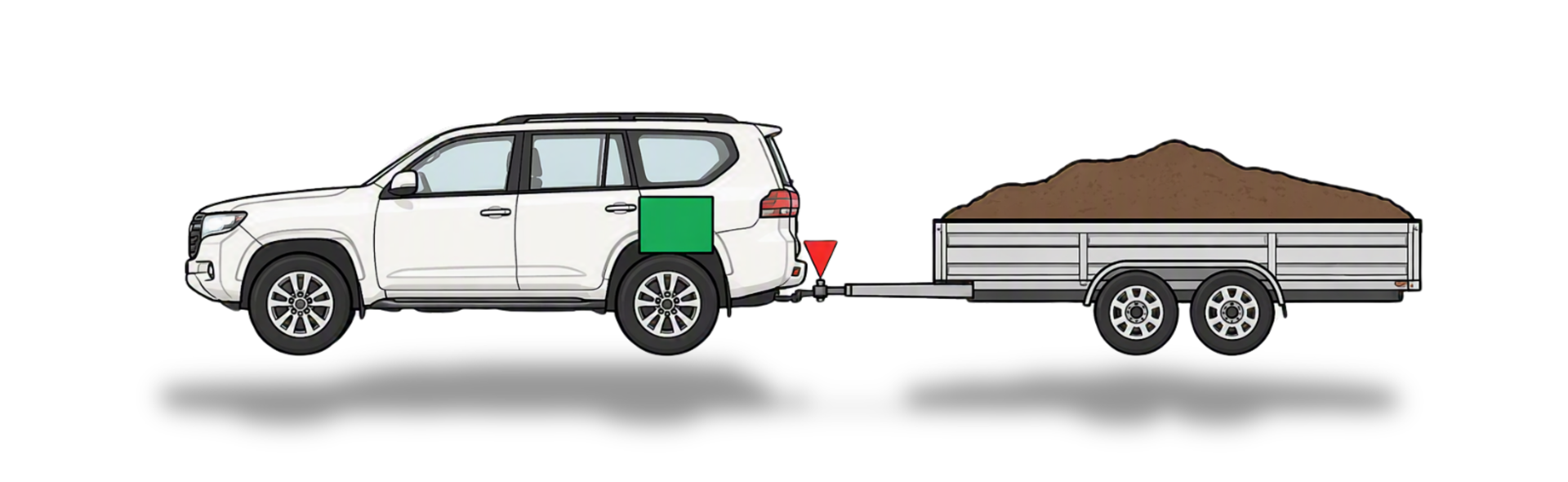
Yes. Tow ball download is included in your vehicle's Gross Vehicle Mass (GVM).
This is one of the most misunderstood aspects of towing.
For example:
If your Toyota is already loaded with passengers, camping gear, accessories and luggage, adding a caravan with 300kg of tow ball download may push the vehicle beyond its allowable GVM.
Before every towing trip, confirm:
- Vehicle weight
- Trailer weight
- Tow ball download
- GVM
- GTM
- GCM
How Should You Load a Trailer for Safe Towing?
Correct trailer loading has a significant impact on stability and towing performance.
Best Practice Trailer Loading
✅ Place heavy items directly above or close to the trailer axle
✅ Keep loads as low as possible
✅ Distribute weight evenly
✅ Secure all cargo
✅ Maintain the correct tow ball download
Avoid These Common Loading Mistakes
❌ Heavy items at the rear of the trailer
❌ Uneven weight distribution
❌ Excessive loading at the front
❌ Unsecured cargo
Poor loading can increase trailer sway, reduce control and place additional stress on the vehicle.
How Should You Load a Caravan?
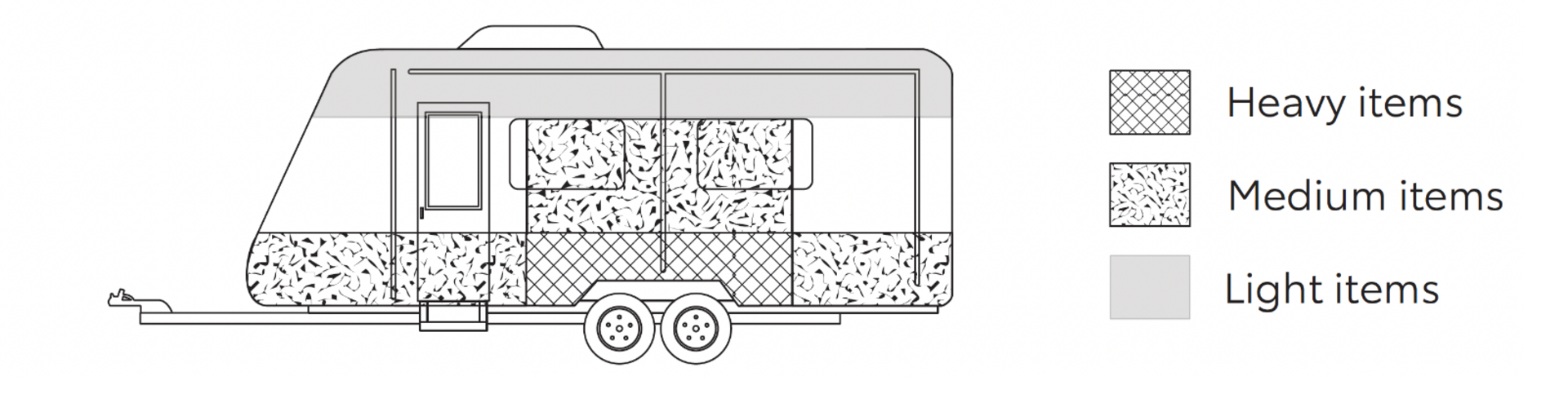
When loading a caravan, concentrate heavier items around the axle area while keeping weight low inside the caravan.
| Item Weight | Recommended Position |
|---|---|
| Heavy Items | Low and close to the axle |
| Medium Weight Items | Centrally positioned |
| Light Items | External cupboards and storage areas |
Avoid excessive weight behind the caravan axle, which can contribute to unwanted trailer movement.

What Is a Load Distribution Hitch (LDH)?
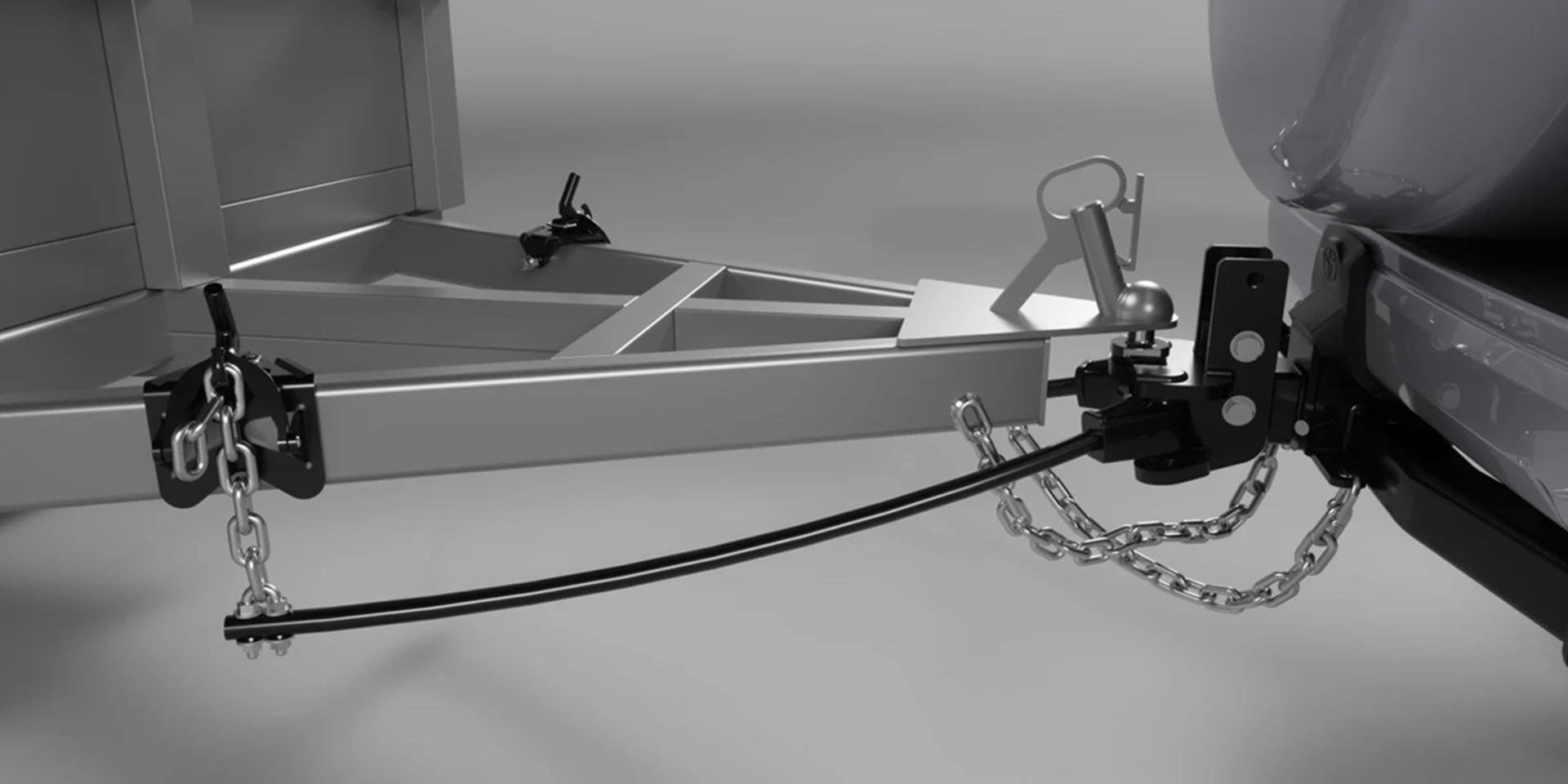
A Load Distribution Hitch (LDH) helps redistribute weight across the towing combination and can improve handling on sealed roads.
However, an LDH is not suitable for every Toyota model or towing application.
Important LDH Guidelines
✅ Designed to support an already correctly loaded setup
✅ Suitable for many highway towing situations
❌ Not intended to correct poor loading
❌ Not suitable for off road driving
❌ Not compatible with high articulation couplings
Always check your Toyota Owner's Manual before fitting an LDH.
Which Trailer Hitch Is Best?
The best coupling depends on how and where you tow.
| Hitch Type | Best For |
|---|---|
| 50mm Tow Ball | Standard trailers and caravans |
| Pintle Hook | Heavy duty applications |
| High Articulation Coupling | Off road caravans and trailers |
Toyota recommends maintaining the genuine tow bar pivot point position and using towing equipment appropriate for the intended application.
What Causes Trailer Sway?
Trailer sway is usually caused by one or more of the following:
- Incorrect tow ball download
- Excessive speed
- Poor weight distribution
- Overloaded trailer
- Underinflated tyres
- Strong crosswinds
- Passing trucks creating wind buffeting
- Suspension issues
If sway occurs, reduce speed gradually and safely. Avoid sudden steering, braking or acceleration inputs.

What Affects Towing Stability?
Many factors influence how safely a vehicle and trailer operate together.
Tyre Pressures
Check both vehicle and trailer tyres before every trip.
Vehicle Weight
Stay within manufacturer-specified limits.
Trailer Weight
Avoid exceeding the trailer's maximum loaded weight.
Suspension Condition
Inspect vehicle and trailer suspension regularly.
Driving Style
When towing:
- Accelerate smoothly
- Brake progressively
- Avoid sudden steering inputs
- Reduce speed in difficult conditions
Wind Conditions
Be particularly cautious when towing larger caravans along exposed coastal roads where crosswinds can have a greater impact.
Pre Towing Safety Checklist
Before every trip, complete a full safety inspection.
Vehicle Checklist
- Correct tyre pressures
- Tow bar securely fitted
- Mirrors installed and adjusted
- Within GVM limits
- Suspension in good condition
Trailer Checklist
- Tyre pressures correct
- Trailer brakes working
- Trailer lights operational
- Safety chains attached
- Load secured
- Coupling correctly connected
- Tow ball tension checked
Even a quick five-minute inspection can help avoid major problems on the road.
Do Trailer Brakes and Trailer Lights Need to Be Checked?
Absolutely. Before every trip:
- Test brake lights
- Confirm indicators operate correctly
- Check tail lights
- Test electric brake systems
- Verify trailer brakes function correctly
Never assume a trailer is road-ready without testing all systems.
Why Are Safety Chains Important?
Safety chains provide an additional level of protection should the trailer coupling become disconnected.
Always:
- Inspect safety chains regularly
- Ensure chains are correctly attached
- Replace damaged components promptly
- Follow applicable towing regulations
Should You Modify Your Tow Bar?
Toyota advises tow bars are designed specifically for towing applications.
Unauthorised modifications may:
- Reduce towing safety
- Affect performance
- Alter load ratings
- Impact warranty coverage
Always use towing equipment as intended by the manufacturer.
How Often Should You Service Towing Equipment?
Towing places additional strain on your vehicle and trailer components.
Regular inspections should include:
- Tow bar mounting points
- Tow ball condition
- Trailer coupling
- Trailer brakes
- Safety chains
- Electrical wiring
- Suspension components
Frequent towing, off road use or heavy loads may require more frequent inspections.
Final Thoughts: Safe Towing Starts Before You Leave Home
Successful towing is about far more than simply attaching a trailer. Understanding weight limits, correct loading techniques, tow ball download and towing stability can help improve safety, comfort and confidence on every journey.
Whether you're heading off with a caravan, launching a boat for a weekend away, or towing for work, taking the time to set up correctly is one of the most important steps you can take.
Book a Towing Safety Inspection at Sunshine Toyota
Planning your next towing adventure?
Our factory trained technicians can inspect your tow bar, suspension, tyres, brakes, towing setup and vehicle compliance to help ensure you're ready for the road.
Book a Service with Sunshine Toyota today and tow with confidence.


